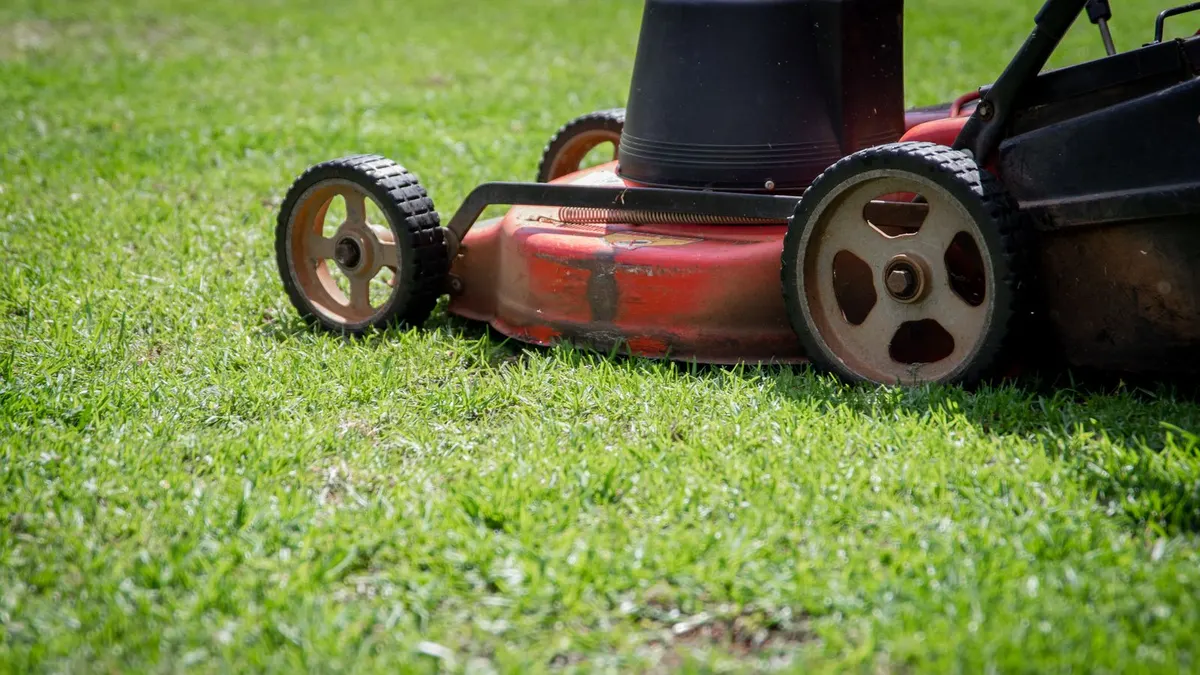
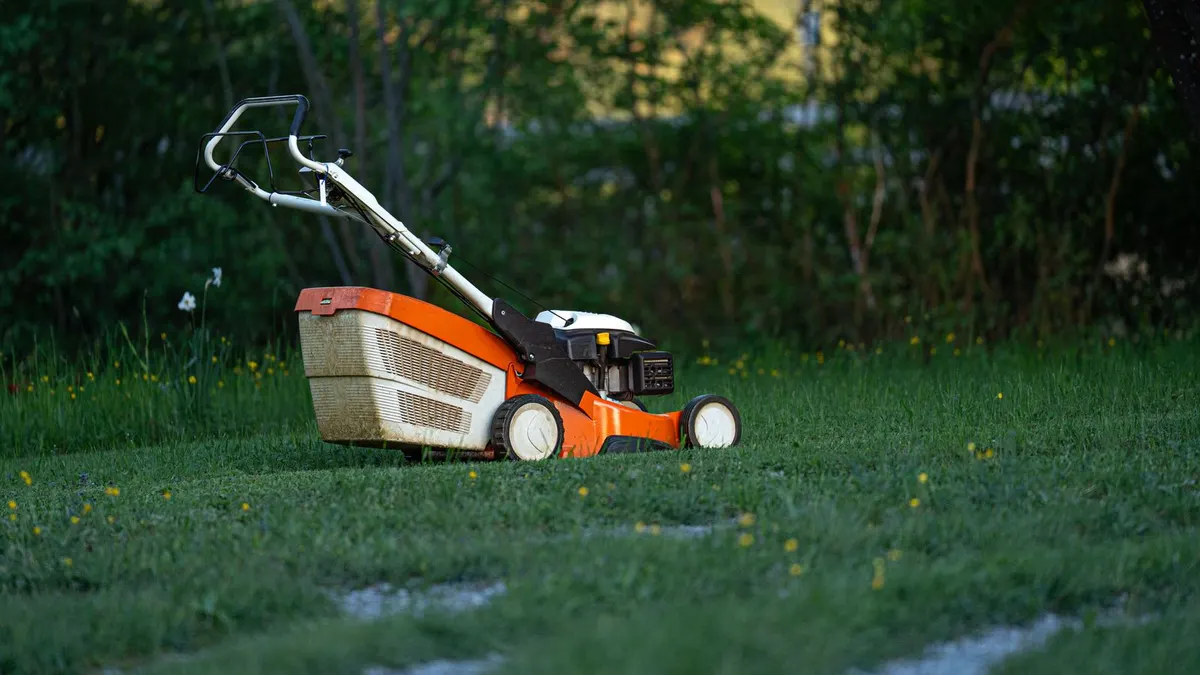
Commercial Lawn Mowing: Why Scheduling Is the Whole Product
Customers judge a business by its grounds long before the front door. What consistent commercial grass cutting looks like and what it signals.
Read the article
Lawns in the tri-cities live on a hard schedule: buried until March, sprinting through June, baking in August, then buried again. Working with that rhythm instead of against it is most of what separates the deep green lawns from the patchy ones. Here is the calendar we run on hundreds of tri-cities lawns, month by month.
Once the ground firms up, rake out matted grass and winter debris so air reaches the crowns. Overseed thin patches and repair the strip along the driveway where plow and salt did their damage over the winter. First cut comes when growth starts, on the high side of the blade. Spring fertilizer goes down once the lawn is actively growing, not before; feeding dormant turf feeds the storm drains.
This is also the month to deal with compaction. If water pools where it never used to, or the soil feels like pavement after a winter of foot traffic and plow weight, spring aeration opens it back up before the growing season leans on it.
Weekly mowing, sharp blades, and never removing more than a third of the height; the one-third rule is the closest thing turf care has to a law. This is when the lawn builds the density that shades out weeds for the rest of the year. If you water, water deeply and rarely, early in the morning, and let the roots chase the moisture down.
Raise the cutting height and let the extra leaf shade the roots. In a dry spell, an unwatered lawn goes brown and dormant, and that is fine; it is asleep, not dead, and it comes back with the rain. What kills lawns in a tri-cities August is cutting short and cutting dull, which tears the plant while it is already rationing water. Skip the mid-day watering entirely; most of it evaporates before it reaches anything alive.
Fall is the best time of year to thicken a lawn in southern Ontario. Cooler nights, warm soil, and fall rains make September seed germinate better than May seed ever will. Overseed, topdress, fertilize, and keep mowing until growth stops. The work done in these four weeks pays out next May, when your lawn greens up two weeks ahead of the street.
Keep leaves from matting on the turf, drop the final cut slightly shorter, and finish with a fall cleanup so the lawn goes under the snow dry and clear. Matted leaves under snow are the recipe for snow mould, and the grey patches you see in April were decided in November.
A note on watering through the whole calendar: deep and rare beats shallow and often in every month. One long soak that reaches a spade's depth grows roots that survive August; a nightly sprinkle grows shallow roots and fungus. Early morning is the right hour, a rain gauge or a tuna can tells you when you have applied enough, and in most tri-cities summers a lawn needs far less supplemental water than the sprinkler habit assumes.
If the calendar is the part you do not have time for, our lawn mowing routes run this entire rhythm automatically across Kitchener, Waterloo, and Cambridge. Call (519) 400-1338 and put your lawn on the schedule.
Customers judge a business by its grounds long before the front door. What consistent commercial grass cutting looks like and what it signals.
Read the articleWeekly in the surge, biweekly in the lull, and never more than a third off at once. The simple mowing rules that keep turf healthy.
Read the articleFast quotes, reliable crews, and commercial site visits within 24 hours.