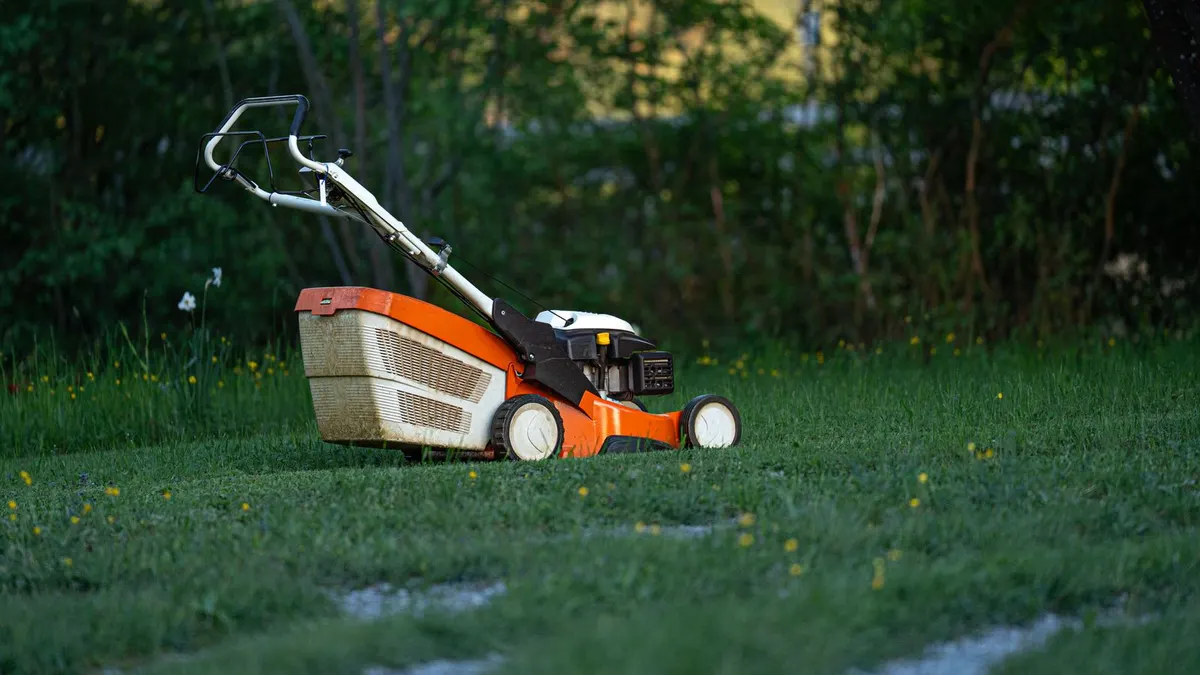

A Lawn Care Calendar for Kitchener-Waterloo: What to Do and When
From April rake-out to November shutdown, the month-by-month rhythm that keeps a tri-cities lawn thick, green, and ahead of the weeds.
Read the article
Fertilizer is where lawn care collects the most myths, most of them printed on the bag itself. The truth for tri-cities lawns is simple: a cool-season lawn needs two or three well-timed feedings a year, and the timing matters far more than the brand. Get the calendar right and a modest program outperforms an expensive monthly one every time.
Late spring, once the lawn is fully awake and growing, is the first feeding. Early fall, around September, is the most important one, because the lawn uses it to thicken, push roots, and store energy for winter rather than just growing taller. A light late-fall application before the ground freezes helps the lawn green up earlier in spring. Skip the early-March feeding entirely; the lawn cannot use it, and the runoff ends up in the Grand River watershed doing nothing good for anyone.
The three numbers are nitrogen, phosphorus, and potassium, always in that order. Nitrogen drives green top growth, potassium builds stress tolerance for drought and cold, and phosphorus matters mainly for new seed, which is why Ontario restricts it in regular lawn fertilizer. For an established lawn, a product with a slow-release nitrogen source is worth the few extra dollars, because it feeds evenly for weeks instead of surging and fading in one flush of growth you just have to mow off.
Most fertilizer damage is application damage: overlapping passes, spills, and heavy hands leave stripes and burns that take weeks to grow out. Half-rate passes in two directions with a broadcast spreader give an even feed with no stripes. Water it in if rain is not coming within a day or two, and sweep whatever lands on the driveway back onto the turf; it does nothing on pavement except stain it and wash away.
Fertilizer thickens a healthy lawn; it does not fix compaction, shade, grubs, or salt burn. If a lawn is failing, find the cause before pouring nitrogen at the symptom. A struggling lawn in April usually needs the winter damage repaired first: rake-out, overseeding, and soil work, with feeding as the follow-through rather than the fix.
Fertilization also works best when the mowing underneath it is right. A lawn cut at a healthy height with sharp blades uses its feeding to thicken; a scalped lawn converts the same feeding into stress. The two programs belong together, which is why our lawn mowing clients can fold fertilization into the same seasonal schedule.
If you want the version that fits on a sticky note: feed in late May, feed again in early September, optionally once more in late October, spread everything at half rate in two directions, and never feed a dormant lawn. That is the entire secret, and it beats the four-jug program on price and results.
One upgrade worth the effort every few years: a basic soil test. A twenty-dollar kit, or a sample sent to a lab, tells you the pH and what the soil actually lacks, which turns fertilizing from guesswork into a targeted fix. Most tri-cities lawns run slightly alkaline and short on nitrogen, but the exceptions are exactly the lawns that never respond to the standard program, and the test is how you find out yours is one of them.
North Bear Land & Snow Inc. runs fertilization as part of lawn care plans across the tri-cities, timed to the local season rather than the calendar on the bag. Call (519) 400-1338 to set up a program.
From April rake-out to November shutdown, the month-by-month rhythm that keeps a tri-cities lawn thick, green, and ahead of the weeds.
Read the articleCustomers judge a business by its grounds long before the front door. What consistent commercial grass cutting looks like and what it signals.
Read the articleFast quotes, reliable crews, and commercial site visits within 24 hours.